- Serving Boston and the Greater Boston Area

Roof Deck Planting in Newton, MA
A roof deck in Newton solves a problem that a shaded, tree-ordinance-restricted village lot often can’t: it gives a homeowner a patch of open sky for planting that the ground floor simply doesn’t have. Between deer working the foundation beds all summer and mature canopy trees a homeowner may not be legally free to prune back, the deck becomes the one growing space with real light and no browsing pressure. That’s the case we see over and over in Newtonville, Waban, and Chestnut Hill, and it’s why the planting plan for a Newton roof deck looks different from one built for a rowhouse rooftop closer to Boston.

What Roof Deck Planting looks like in Newton
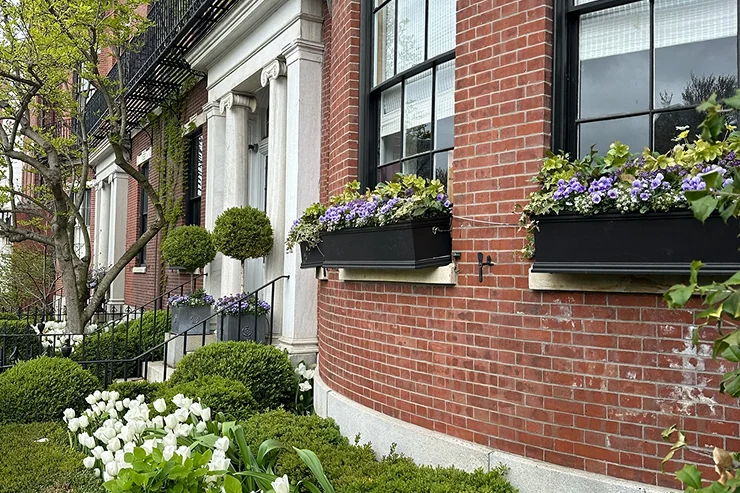
Most of the roof decks we plant in Newton sit above additions or garages on village lots that were built out decades before anyone anticipated a rooftop garden. The house below usually has established foundation plantings that the deck is meant to visually echo, so we start there — pulling color, form, and plant character from what’s already growing at ground level rather than dropping in something that reads as disconnected from the property.
Light is the first variable we test on-site rather than assume. A deck over a garage in Waban might sit clear of the tree line and run full sun most of the day, while a deck tucked against a hillside lot in Newton Highlands can be dappled shade from May through October. We take actual readings before specifying anything, because a planting plan built on a guess about sun exposure is the single most common reason a rooftop garden underperforms in year two.
Wind and exposure matter more on Newton’s hillier lots than people expect — Waban Hill, Institution Hill, and the ridge along Chestnut Hill all funnel wind in ways that flat village streets don’t, so container weight, plant selection, and staking get adjusted accordingly. Soil is entirely engineered: lightweight growing medium in load-rated containers, since there’s no native soil at deck height and structural capacity is fixed by the framing below. And because Newton’s tree ordinance governs removals and can affect what happens to canopy near a deck project, we coordinate early with the homeowner and, when required, the city, rather than treating tree work as an afterthought once planting begins.
What we account for here
What we account for here
Four constraints come up on nearly every Newton roof deck project, and each one changes the plan in a specific, practical way.
Newton's tree ordinance and canopy coordination
Newton regulates removal of significant trees on private property, and a roof deck project that requires trimming or removing a tree to open up light can trigger that review. We flag likely ordinance issues at the first site visit, help the homeowner understand what documentation the city will want, and build the planting timeline around the approval rather than assuming removal will be quick or automatic.
Deer pressure pushed upward
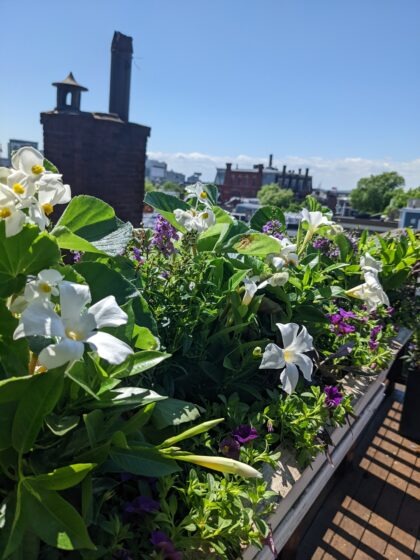
Newton’s village lots back onto enough green space — the Newton Cemetery, the Cold Spring Park corridor, wooded rear yards in Waban and Auburndale — that deer browsing at ground level is routine. A roof deck is naturally deer-free, which is often the real reason a client wants one, and we lean into that: tulips, hostas, and other classic deer candy that would get stripped in the foundation beds are fair game up top.
Shade from mature street and yard trees
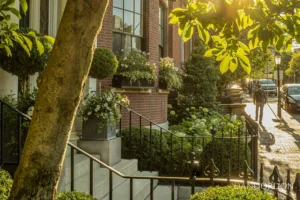
Many Newton streets — Waban Avenue, parts of Newtonville, the older sections near Crystal Lake — carry heavy tree canopy that shades even second- and third-story decks for large parts of the day. Where a deck sits under that canopy rather than above it, we specify shade-tolerant containers and layer in reflected light from adjacent walls to keep the planting reading full rather than sparse.
Structural load on additions and garages
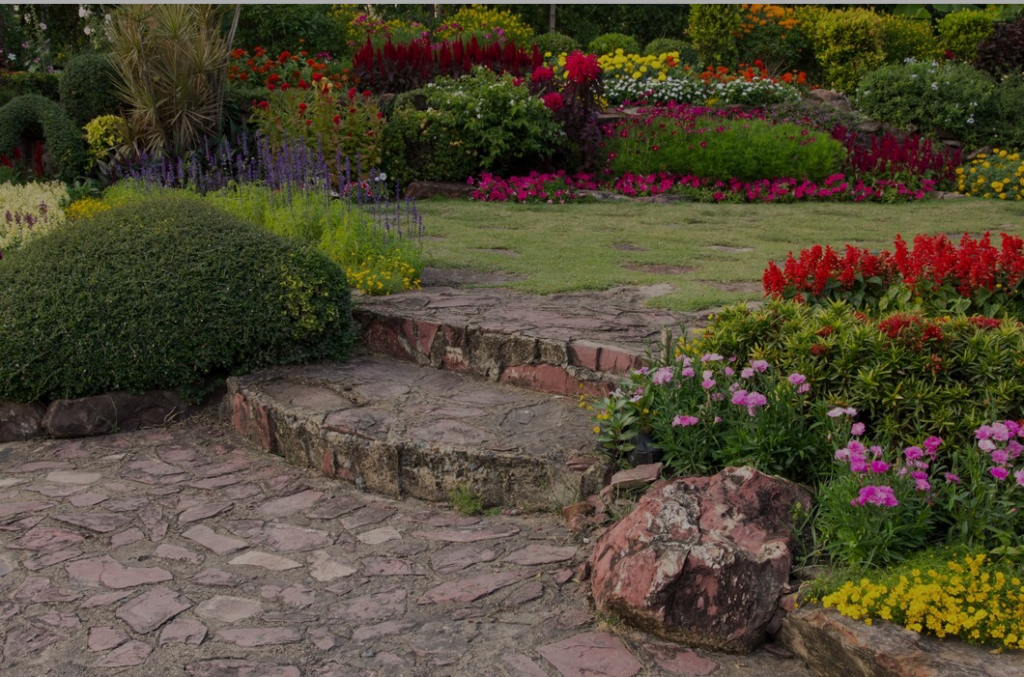
A large share of Newton’s roof decks were built over garages, mudroom additions, or flat-roofed extensions rather than the main house frame, and load capacity on those structures varies widely by build year and original engineering. We work from the deck’s documented load rating, use lightweight soil mixes and container materials, and group heavier plantings over structural points rather than spreading dead weight across an unsupported span.
Recent Newton work
A typical recent project: a garage-roof deck in Newton Highlands where the existing foundation beds had been chewed back by deer for two seasons running. We moved the client’s favorite bulb and perennial palette up to the deck in engineered containers, kept the ground-level beds to deer-resistant plantings only, and coordinated a single small canopy trim with the city’s tree office to bring afternoon sun onto the deck without triggering a larger review. The result reads as one continuous garden across two levels, even though the growing conditions above and below are almost opposite.
Other services we provide in Newton
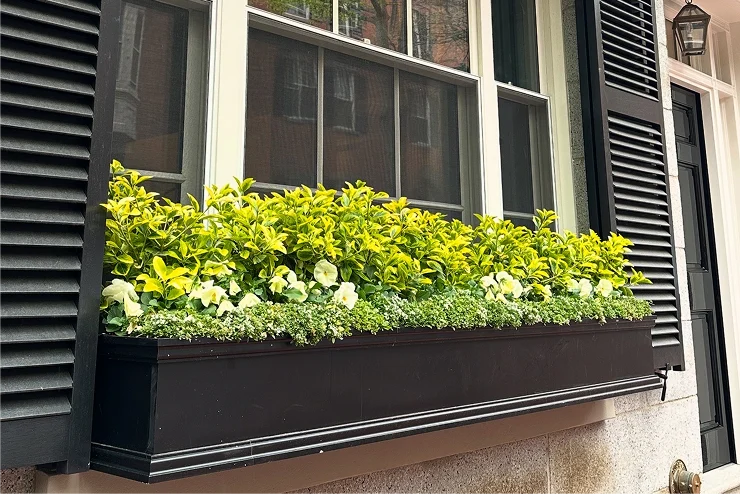
Roof deck planting is rarely a standalone request in Newton — it usually surfaces alongside a broader look at the property. We handle full garden services in Newton, including garden design and installation for village lots working around ordinance-protected trees, fine gardening and ongoing maintenance through the deer-heavy growing season, containers and window boxes for entries and porches that echo the roof deck’s plant palette, drip irrigation run to both ground beds and rooftop containers so watering schedules stay consistent, and low-voltage landscape lighting that ties a shaded front path to an illuminated deck above. Most Newton clients start with one of these and add the others once they see how the plantings hold up.
Start with a site visit
Newton is about 8.6 miles from our Newton location, and a roof deck planting project always starts with an in-person visit — checking actual sun exposure, confirming the deck’s load rating, and flagging any tree ordinance question before a plant list gets written. Call Rouvalis Gardens to set up that visit. We’ll walk the deck and the beds below it together, talk through what the tree ordinance means for your specific canopy, and leave you with a clear plan and next step before we go.
What Our Customers Say
Frequently Asked Questions
Does Newton's tree ordinance affect roof deck projects?
It can, if the project involves removing or significantly trimming a protected tree to open up light for the deck. We check this at the first site visit and help coordinate any required city review before planting begins, rather than discovering the issue mid-project.
Will a roof deck actually solve our deer problem?
It solves it for whatever you plant up there. Newton's village lots back onto enough wooded and open space that ground-level deer browsing is common, and a roof deck is naturally out of reach, so it's often the one place a client can grow tulips, hostas, or other deer favorites without protection.
Our deck sits over a garage, not the main house — is that a problem?
It changes the plan but doesn't rule anything out. Garage and addition roofs vary in load capacity by build year, so we work from the deck's documented rating, use lightweight growing medium, and position heavier containers over structural support points.
What if our deck gets heavy shade from street trees?
We test actual light levels on-site rather than assume, and where shade is significant — common on older, tree-lined Newton streets — we specify shade-tolerant plantings and use reflected light from nearby walls to keep the garden looking full rather than thin.
Do you handle both the roof deck and the ground-floor garden?
Yes, and on most Newton properties we recommend planning them together, since the deck and the foundation beds are often working around opposite conditions — full sun and no deer up top, shade and heavy browsing below.