- Serving Boston and the Greater Boston Area

Roof Deck Planting in Winchester, MA
A roof deck above a sloped lot near the Mystic Lakes behaves differently than one on flat ground. Lake-effect wind moves across the water and up the grade, mature oak canopy on neighboring lots throws shifting shade across the day, and deer that move freely through the unfenced, wooded corridors around the lakes will climb a short retaining wall for a planted deck as readily as a ground-level bed. Any planting plan for a Winchester roof deck has to account for all three before it accounts for style.

What Roof Deck Planting looks like in Winchester
Winchester’s roof decks and elevated terraces tend to sit on additions or renovated garages built into a slope, which means the deck itself is often higher off grade than it looks from the street, and more exposed to wind than the homeowner expects on the first windy September evening. We start with an on-site wind and light read at the actual deck level, not from the ground, because a deck tucked behind a gable on one side of the house can be nearly calm while an open corner fifteen feet away gets a steady draw off the lake.
Soil is container soil here almost without exception — there is no native bed to fall back on — so structure, drainage, and weight all have to be engineered into the mix from the start rather than corrected later. On the oak-canopy side of a lot, we plan for dappled to moderate shade through most of the season and choose plant material accordingly; on the lake side, for more direct sun and steadier wind. Many Winchester properties near the lakes and along the Aberjona corridor also fall under some form of local conservation or setback review when structural changes are involved, so where planting ties into new railings, screens, or built-in planters, we design in a form that reads as furnishing rather than construction — it keeps approvals simpler and keeps the homeowner from having to explain a filing for something that is, functionally, a set of large pots.
Deer pressure is the detail that catches most first-time deck gardeners off guard. A roof deck feels like it should be above the browse line, but on a sloped lot with a deer path running behind the property, animals will step from a retaining wall or shed roof directly onto a lower deck level. We plan sightlines and plant choice with that in mind rather than assuming height alone solves it.
What we account for here
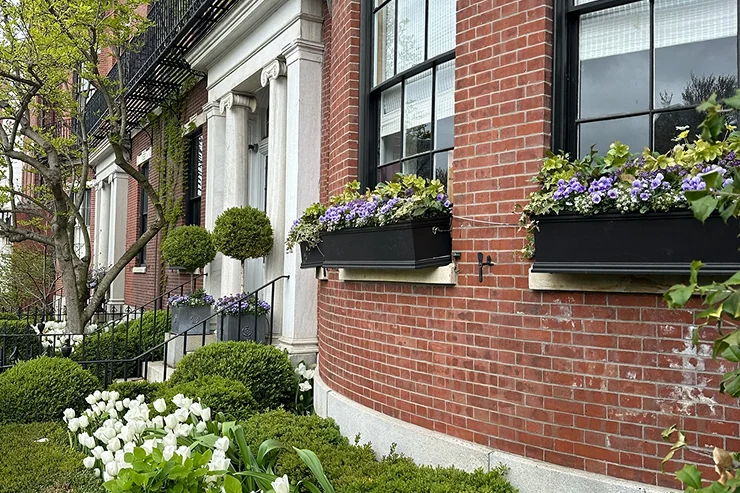
What we account for here
Every Winchester roof deck brings its own load limits, drainage points, and rooftop access constraints, and we work within them from the start. Before choosing a single container or plant, we look at structural capacity, exposure, irrigation lines, and how materials will hold up above the elements year after year.
Wind off the Mystic Lakes
Open decks facing the water get a steady, cooling draw that most ornamental annuals cannot hold up against past midsummer. We anchor these plantings with wind-tolerant grasses, dwarf conifers, and woody perennials in weighted, wide-based containers, and reserve softer bloom for the more sheltered side of the deck.
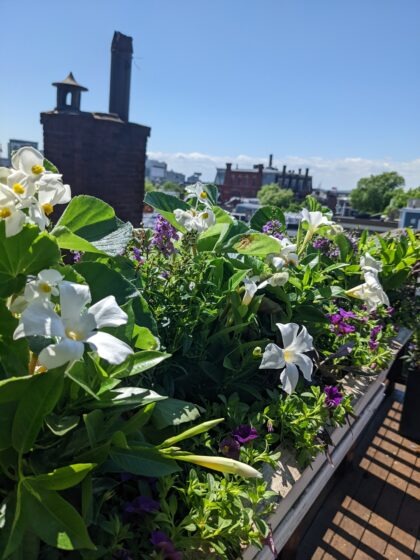
Mature oak canopy and shifting shade
A deck bordered by neighboring oaks gets strong shade in June that thins considerably by September as the sun angle drops, even though the canopy hasn’t changed. We select plant palettes that read well across that shift rather than plants that peak in one narrow light window and fade for the rest of the season.
Sloped-lot access and deck elevation
Many Winchester roof decks sit atop a garage or addition built into a hillside, which means soil, containers, and irrigation materials often have to be carried up an exterior stair rather than delivered at grade. We plan container sizing and delivery sequencing around that access before the first pot arrives, so the crew isn’t improvising a lift plan on install day.
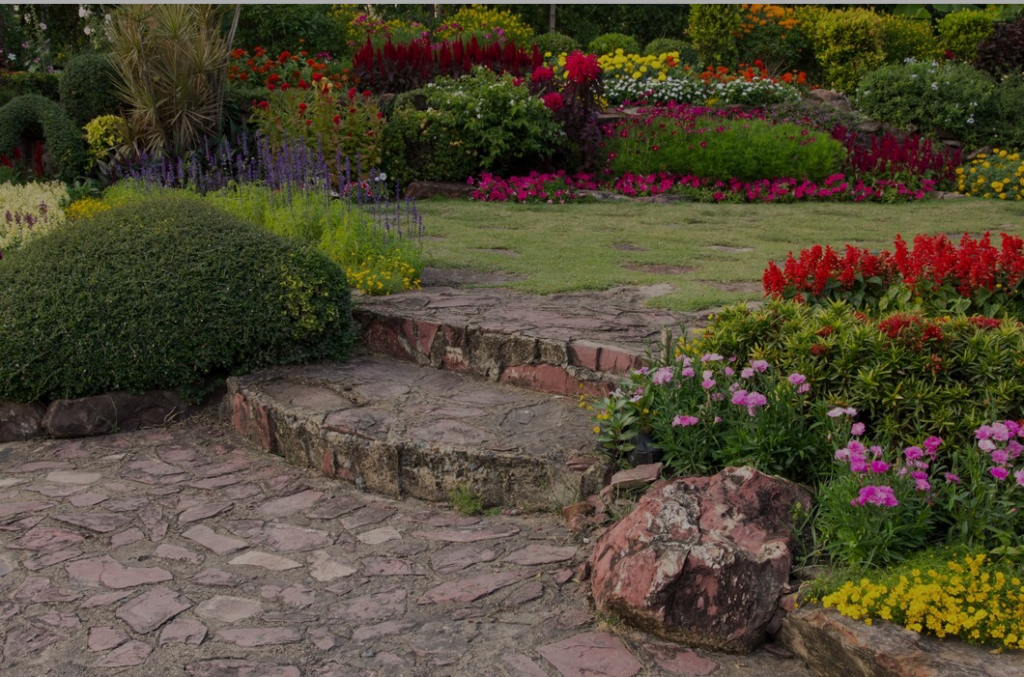
Deer reaching upper levels from graded terrain
On properties where a retaining wall, shed roof, or graded slope puts a deer within a short step of a lower deck level, we treat the planting the way we’d treat a ground-floor bed — choosing deer-resistant material as the rule, not the exception, and reserving anything deer find appealing for containers that sit clearly out of reach.
Recent Winchester work
Recent work in Winchester has included a lakeside-facing deck where the original planting plan called for tender annuals that struggled against the wind by July; we reworked the palette around ornamental grasses, boxwood, and dwarf evergreens that hold their form through the season. On another sloped property near the lakes, we built a phased container plan that could be carried up a narrow exterior stair in manageable loads and irrigated on the same drip line as the ground-floor beds below, so the homeowner isn’t running two separate watering schedules for one property.
Other services we provide in Winchester
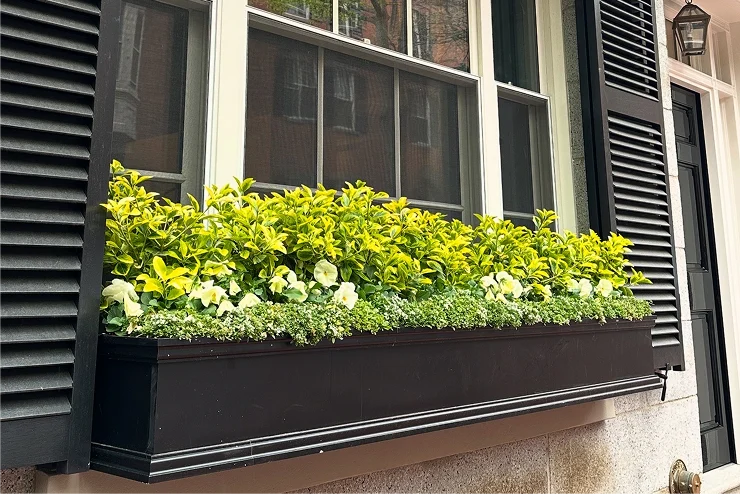
Roof deck planting is one piece of a broader Winchester program for most of our clients here. We also handle full-property garden design and installation, ongoing fine gardening and seasonal maintenance for properties bordering the lakes and wooded lots, containers and window boxes for homes closer to the town center, drip irrigation tied into existing systems on sloped lots, and low-voltage landscape lighting designed to work with mature oak canopy rather than against it. Because Winchester includes a florist boutique client with an active cross-sell relationship, we also coordinate seasonal container refreshes and holiday plantings on a schedule that lines up with the shop’s own calendar. For a full look at what we handle across the town, see our Winchester garden services page. If you’re comparing roof deck work across towns, our approach is similar in scope to what we do in Boston, and to nearby communities we also serve directly, including Newton and Brookline.
Start with a site visit
Winchester is roughly 6.9 miles from our Winchester location, and most roof deck projects here start with a site visit rather than a phone estimate — wind, canopy shade, and deer paths vary enough from one lot to the next near the lakes that we need to see the deck before proposing a plant list. Call to schedule that visit, and we’ll walk the deck with you, note sun, wind, and access conditions on the spot, and follow up with a plant and container plan built around what we find, not a generic template.
What Our Customers Say
Frequently Asked Questions
Will deer actually get onto a roof deck in Winchester?
On decks built at or near grade off a sloped lot, or near a retaining wall, shed roof, or graded terrain, yes — deer will step across from an adjacent structure. We assess the specific deck's elevation and surrounding grade before assuming height alone protects the planting.
Does planting near the Mystic Lakes need any special review?
Some Winchester properties near the lakes or along the Aberjona corridor fall under local conservation or setback review, particularly for anything structural. We design planters and screens to read as furnishings rather than construction where possible, which generally keeps the project outside of formal review.
What plants actually hold up to wind off the lake?
Ornamental grasses, dwarf conifers, and woody perennials in wide, weighted containers perform reliably on exposed, water-facing decks. Softer annuals and tender bloom are better reserved for the sheltered side of the same deck.
How do you handle a deck with no direct truck or elevator access?
We plan container sizing and material quantities around what can realistically be carried up an exterior stair, and sequence delivery in stages rather than arriving with a full load that can't be moved efficiently on install day.
Do you maintain the planting after installation, or just install it?
Most Winchester clients move into ongoing seasonal maintenance after the initial install, since oak canopy shade shifts significantly from early to late season and containers need more frequent attention than an in-ground bed.