- Serving Boston and the Greater Boston Area

Landscape Design in Wellesley, MA
A landscape design plan for a Wellesley property has to answer three questions before a single plant is chosen: how much sun actually reaches the beds under a canopy of 80-year-old oaks and beeches, how the planting will read against a formal garden layout that may already be a century old, and how it survives a deer population that treats most nursery stock as a buffet. Add the cooler, damper microclimate that sits around the Wellesley College campus and the low-lying land near Lake Waban, and a planting palette that works two towns over often fails here outright.

What Landscape Design looks like in Wellesley
Most of the design work we do in Wellesley starts with an existing framework rather than a blank lot. These are estate properties on Dover Road, Cliff Road, the Cedar Street and Abbott Road area, and the streets ringing the college, many of them holding onto boxwood parterres, allées, or perennial borders laid out by a previous generation’s landscape architect. The job is rarely to erase that structure. It is to read what is original, decide what still earns its place, and rebuild the parts that have thinned out, been chewed to stubs, or simply outgrown their beds.
Light is the first variable that changes plan to plan. A border that sat in full sun when the trees were young may now be under 60 percent shade from mature canopy, which means the peonies and roses specified in the original plan are struggling and need to be replaced with something suited to dappled light rather than fought with pruning that damages the tree. Soil on these older properties is usually decent loam, but decades of leaf litter and clay pockets near foundations mean we test before we plant rather than assume.
Wind and cold air are the second variable, particularly on properties near Lake Waban and the lower ground around the college, where cold air pools on clear nights and pushes the effective hardiness zone down half a step. Plant selection accounts for that, especially for broadleaf evergreens and anything marginal for zone 6. Formal gardens in this town also tend to fall under some level of scrutiny — from a homeowners’ association, a historic overlay, or simply a neighborhood where sightlines and hedge heights are watched closely — so plans are drawn with an eye toward what will read as consistent with the street rather than a departure from it.
What we account for here
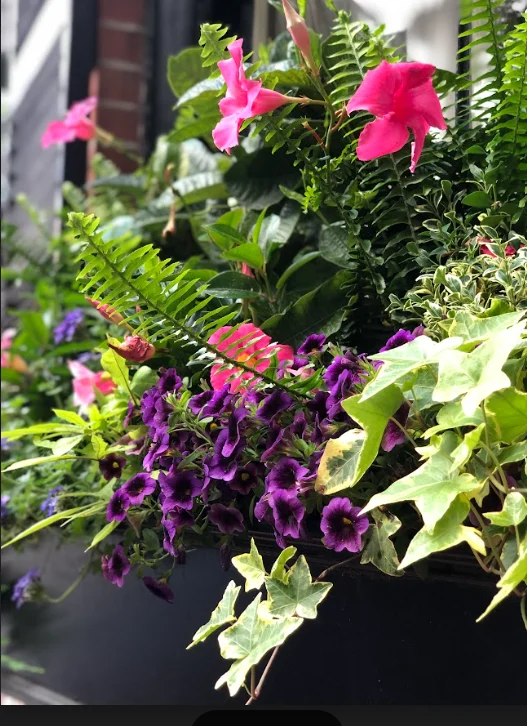
What we account for here
Every Wellesley plan we draw works around the same handful of site realities. These are the ones that come up on nearly every property.
Deer pressure on estate perimeters
Wellesley’s larger lots, especially those backing onto conservation land, golf courses, or unfenced neighboring yards, see consistent deer traffic. We design with deer-resistant plant families as the backbone — boxwood, viburnum, andromeda, ornamental grasses, most alliums — and reserve deer candy like hosta, hydrangea, and arborvitae for spots close to the house or protected by low-voltage fencing and repellant programs built into the maintenance visit. A plan that ignores this browses down to sticks by the second spring.
Formal garden traditions and existing structure
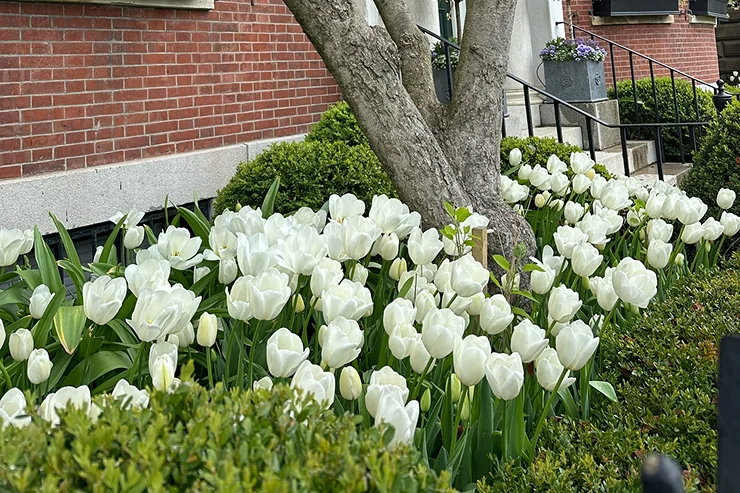
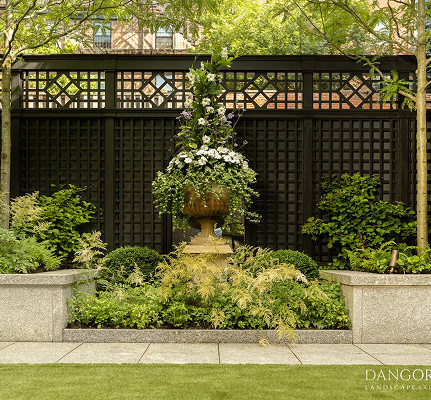
Many Wellesley properties carry a formal design vocabulary — clipped hedges, symmetrical beds, a central axis — that was intentional and often expensive to establish. We survey what is original before proposing changes, keep the bones that still work, and match new plant material and hardscape edging to the existing style rather than introducing a competing design language halfway across the same lot.
Mature canopy and changing shade patterns
Oaks, beeches, and maples that were saplings when a garden was first planted now cast shade over beds designed for sun. Rather than removing healthy trees to chase the original plant list, we redesign the understory around the shade the tree actually produces today, using root-tolerant planting techniques and shade perennials that read as intentional rather than as a compromise.
The Wellesley College microclimate
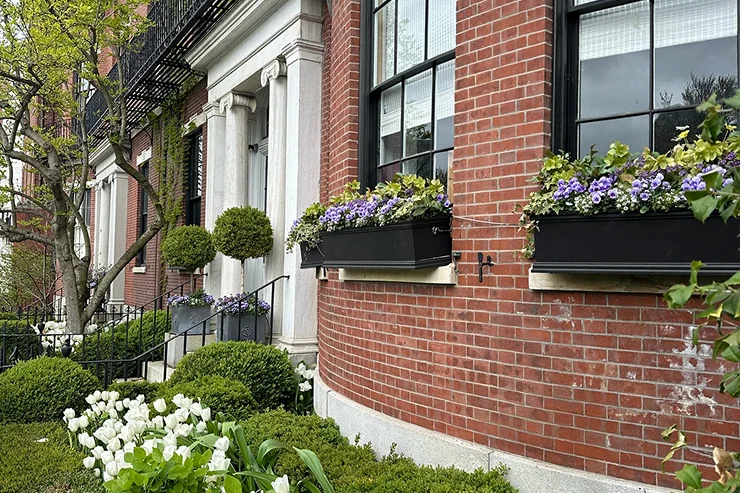
Land near the campus and Lake Waban sits lower and holds cold air longer than surrounding streets, which shifts frost dates and stresses marginal evergreens. We favor proven zone 6 material for anything in these pockets and hold off on borderline zone 7 selections that perform fine a mile away but struggle here.
Recent Wellesley work
A recent project on a Wellesley estate involved reworking a formal boxwood parterre that had partially declined from boxwood blight pressure, replacing the affected sections with a resistant cultivar matched to the existing hedge line, then rebuilding the interior perennial beds for a shade level that had crept up significantly since the original planting. Another common scope in this town is converting a deer-damaged perennial border along a driveway or property line into a structured planting of resistant shrubs and grasses that still reads as a garden from the street rather than a retreat from one. Both jobs share the same starting point: survey first, protect what works, redesign only what has genuinely failed.
Other services we provide in Wellesley
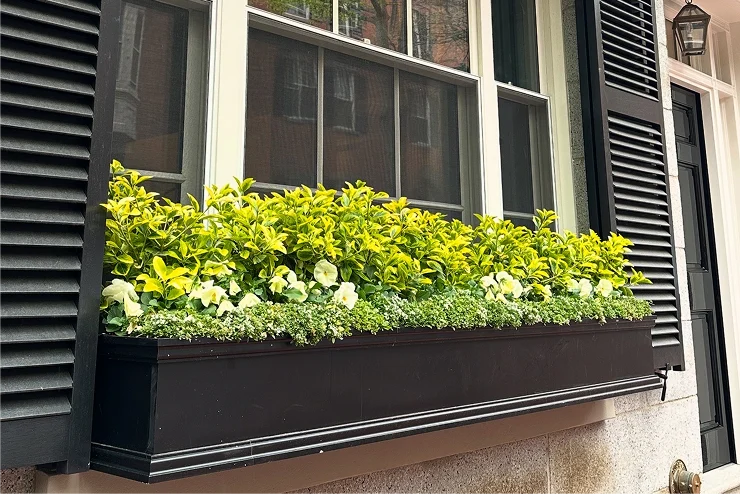
Landscape design is the starting point for most Wellesley relationships, but few gardens of this scale stay static once installed. We provide ongoing garden services in Wellesley to keep a new design performing through its first several seasons — pruning, seasonal bed work, and deer-deterrent maintenance among them. Many of these properties also add container plantings for entries and terraces, roof deck and terrace planting where the lot includes elevated outdoor space, drip irrigation zoned to the specific water needs of a mixed shade-and-sun border, and low-voltage landscape lighting to extend the formal garden’s presence into the evening. All of it is scoped and installed by the same team that draws the original plan, which matters on a property where hedge lines, sightlines, and plant health decisions all touch each other.
Start a Wellesley project
Wellesley is roughly 14.6 miles from our Wellesley location, and we schedule on-site consultations there regularly for both new landscape designs and the redesign of existing formal gardens. Call to arrange a site visit. We will walk the property, note canopy, sun exposure, deer pressure, and existing structure, and follow up with a written design approach and scope before any work begins.
What Our Customers Say
Frequently Asked Questions
How do you design around deer without losing the look of a formal garden?
We build the structural planting — hedges, framework shrubs, evergreens — from deer-resistant species so the garden holds its shape year-round, then place anything deer find appealing closer to the house or behind low-voltage fencing worked into the design. The result reads as a full garden, not a deer-proof one.
Does the Wellesley College area really have a different microclimate than the rest of town?
Yes. Lower ground near the campus and Lake Waban holds cold air longer on clear nights, which pushes the effective hardiness zone down slightly. We adjust plant selection for properties in that pocket rather than using the same list we'd use a mile uphill.
Can you work with an existing formal garden instead of starting over?
That is most of what we do in Wellesley. We survey the original layout, identify what is still healthy and worth keeping, and design replacements only for the sections that have declined, outgrown their space, or lost too much light to mature canopy.
Do you handle approvals if my property has a homeowners' association or historic review?
We design with an awareness of what a review board or association typically expects on hedge height, sightlines, and street-facing consistency, and we can provide drawings and plant lists in the format most boards require for submission.
How far out do you book landscape design consultations in Wellesley?
It varies by season. Spring and early fall are the busiest windows for new design work, so we recommend calling a few weeks ahead if you're targeting a specific planting season.