- Serving Boston and the Greater Boston Area

Landscape Design in Newton, MA
If deer have stripped your hostas to stubs and the north side of your Newton lot barely gets three hours of sun, the design problem isn’t plant selection — it’s sequencing. Most village lots in Newton carry decades of foundation planting installed before the tree canopy filled in, which means the yew hedges and rhododendrons that once thrived are now fighting for light they no longer get. Add a town tree ordinance that governs what can come down and a deer population that treats new plantings as a buffet, and a design plan has to solve for access, shade, and browse pressure before it solves for aesthetics.

What Landscape Design looks like in Newton
Newton is a city of villages — Newton Centre, Newtonville, Waban, Chestnut Hill, Auburndale — and each has its own lot patterns, but the underlying design conditions repeat across nearly all of them. Lots are generally modest in width, houses sit close to the street, and the planting beds around the foundation were often laid out fifty or more years ago, before today’s mature oak and maple canopy existed. That canopy is now the single biggest variable in any Newton design: what reads as a sunny south-facing bed on paper is frequently deep dappled shade by midsummer, and a planting plan that ignores that reality fails within two seasons.
The second variable is deer. Newton’s tree-lined streets and connected backyards give deer easy travel corridors, and beds that aren’t fenced or planted with resistant species get browsed hard, especially in the shoulder seasons when other food is scarce. A design has to account for this from the plant list forward — not as an afterthought once something has already been eaten.
The third variable is the city’s tree ordinance, which regulates removal of trees above a certain diameter on private property in many cases, and more strictly for street and public trees. Any design that involves removing an established tree to open up light or clear a sightline needs to be checked against that ordinance before it becomes part of the plan, not after a crew shows up with a chainsaw. We build that check into the design phase so there are no surprises and no stop-work conversations mid-project.
Put together, a Newton design plan is really a light study, a deer-pressure map, and a tree inventory before it’s a plant list. Get those three right and the planting choices follow naturally.
What we account for here
What we account for here
Newton’s older neighborhoods bring clay-heavy soils, sloped lots near the Charles, and setback rules that vary block to block. We factor drainage patterns, existing grade changes, and neighborhood character into every design so the plan holds up on-site.
Overgrown or misjudged foundation plantings
Many Newton foundation beds were planted decades ago for a sun level that no longer exists. We assess which existing shrubs are salvageable with renovation pruning, which need relocation to a spot that still gets adequate light, and which should be replaced outright with species suited to the shade the property actually has today, not the shade it had when the beds were installed.
Deer browse pressure
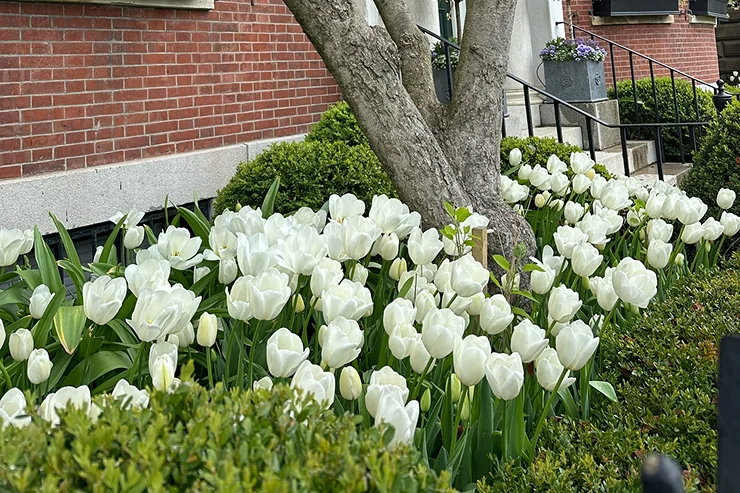
Rather than fight deer plant by plant, we design the palette around species they reliably leave alone — boxwood, andromeda, certain ferns and hellebores — and reserve fencing or repellent programs for the high-value specimens and vegetable or cutting beds where browse-resistant substitution isn’t an option.
The city's tree ordinance
Before any removal is proposed, we confirm the tree’s diameter and status against Newton’s tree preservation rules and, where a permit or hearing is required, build that timeline into the project schedule up front. This is a design-phase task, handled before drawings are finalized, so approvals don’t stall installation later.
Shade from mature street trees and abutting canopy
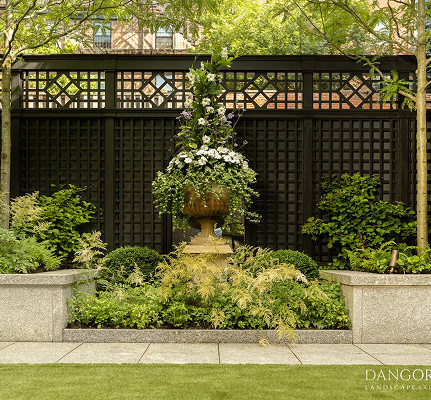
Newton’s tree canopy is one of its defining assets and also its biggest design constraint. We map actual sun hours at different points in the growing season rather than relying on a single site visit, so shade-tolerant layers — understory shrubs, groundcovers, spring ephemerals — are placed where they’ll perform for the long term, not just look good on installation day.
Recent Newton work
Recent design work in Newton has centered on renovating tired foundation plantings around 1920s and 1930s colonials in Waban and Newton Centre — thinning overgrown yew and privet, correcting decades of sun-based plant choices that no longer suit the current shade level, and rebuilding the bed edges with a deer-resistant layered palette. On several projects, a tree ordinance review determined which specimen trees could be limbed up for light versus which needed to stay fully intact, which shaped the entire planting plan around them.
Other services we provide in Newton
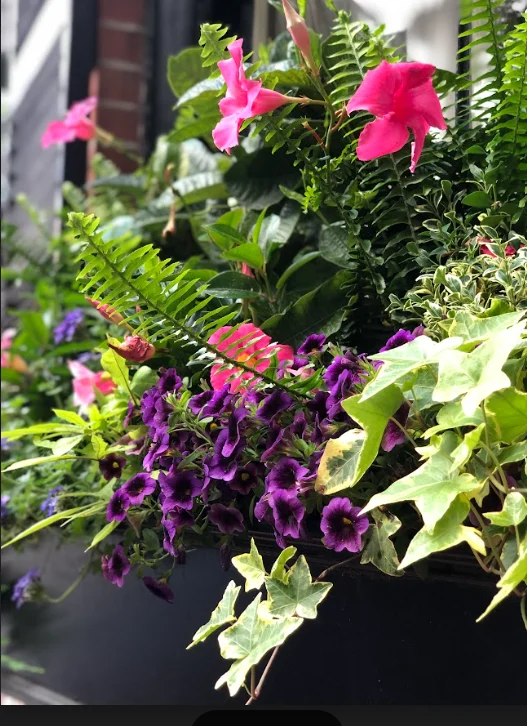
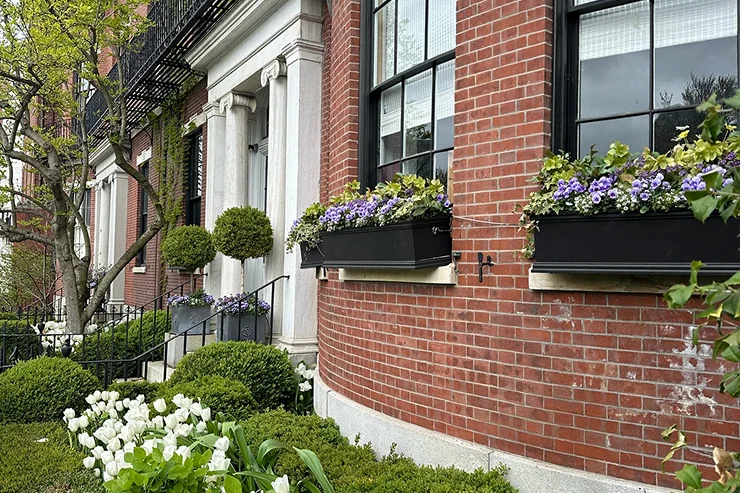
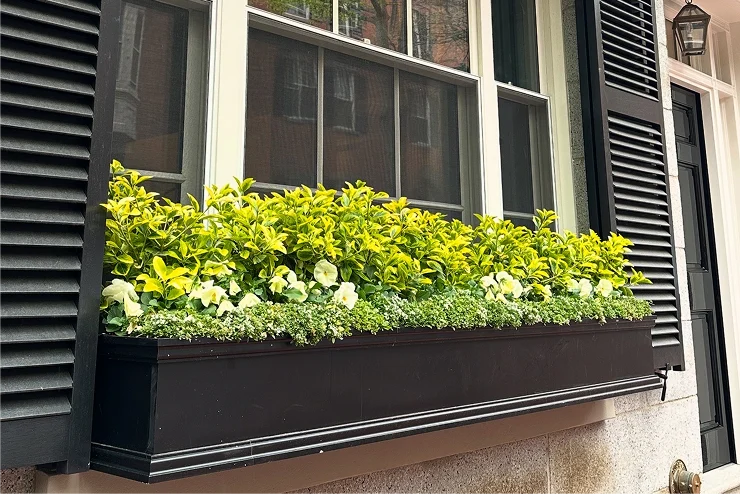
Landscape design in Newton is usually the first phase of a broader relationship. Many clients pair the design with ongoing garden services in Newton, including fine gardening and seasonal maintenance that keeps a new planting plan on track through its first several years — the period when deer pressure and shade adjustment matter most. Village lots with limited flat lawn space often extend the plan to containers and window boxes for the front stoop and side entries, and roof deck or terrace planting where a Newton property has one. Drip irrigation is a near-standard addition on shaded, established beds, since overhead watering encourages the fungal issues that shade already predisposes plants to. Low-voltage landscape lighting rounds out most Newton projects, both for evening use and for highlighting mature specimen trees the tree ordinance has helped preserve.
Start a Newton project
Newton is roughly 8.6 miles from our Newton location, and we regularly work throughout Newton Centre, Newtonville, Waban, Auburndale, and Chestnut Hill. A phone call is the fastest way to start: tell us the address, what’s struggling in the beds, and whether deer or a tree removal question is part of the picture. We’ll schedule a site visit, walk the property with you, and follow up with a design plan and proposal. If a tree ordinance review is needed, we’ll flag that during the first visit so it never becomes a mid-project delay.
What Our Customers Say
Frequently Asked Questions
Does Newton's tree ordinance affect my landscape design project?
It can, if the design involves removing a tree above a certain diameter, particularly a street tree or a large tree on private property. We check the ordinance during the design phase and build any required permit or hearing timeline into the project schedule so it doesn't stall installation later.
How do you design around deer without fencing the whole yard?
We lead with a plant palette deer reliably avoid — boxwood, andromeda, ferns, hellebores among others — and reserve fencing or repellent programs for high-value specimens or edible plantings where a resistant substitute isn't practical.
My foundation beds get almost no sun anymore. Can they be redesigned?
Yes, and this is one of the most common Newton requests. Decades of tree canopy growth turn originally sunny foundation beds into shade beds, and the fix is usually a mix of renovation pruning of salvageable shrubs and replacement planting suited to current, not original, light levels.
Do you handle both design and installation, or just plans?
We handle both, and typically ongoing garden services afterward as well, so the plan is executed by the same team that designed it and maintained by people who understand why it was designed that way.
How far is Newton from your Newton location?
About 8.6 miles. We work throughout Newton's villages regularly and can schedule a site visit within a normal turnaround.